What We Lose When Games Stop Asking Us to Learn
Tim Cain’s thoughts on disappearing RPG features put my Monster Hunter frustrations into focus: discovery, meaningful equipment choices, and the difference between staying occupied and wanting to hunt.
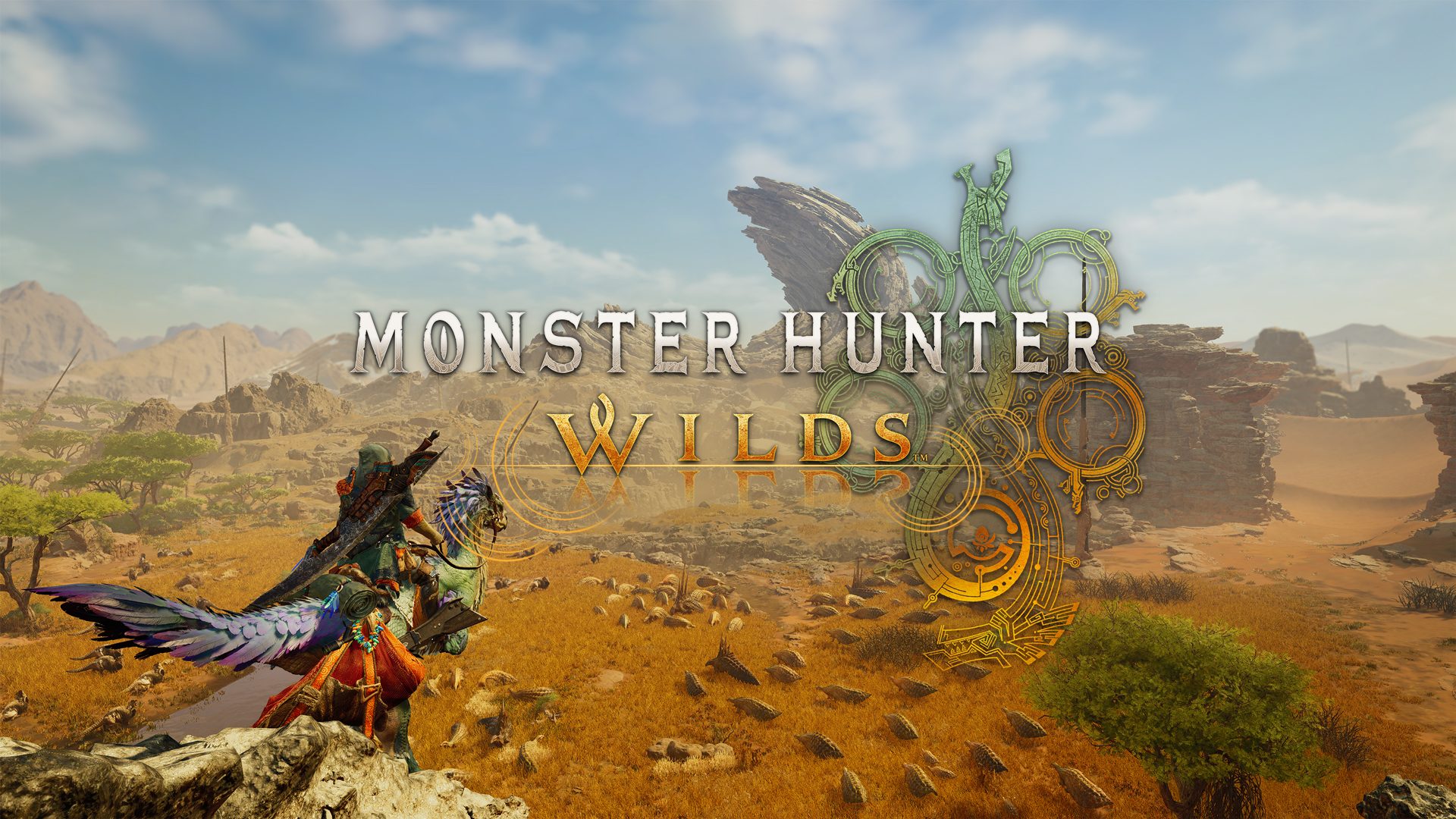
Making Monster Hunter easier to understand was a good idea. I’m less convinced by everything that has happened under the same promise since.
Clearer explanations help people learn. Better matchmaking brings friends together. But preparation, navigation, commitment, and uncertainty also shape how a hunt feels. Changing those things changes the experience, even when we put everything under the comfortable heading of “quality of life.”
A recent video from Timothy Cain helped me put a more precise question behind my frustration: how do we decide which parts of a game are obstacles, and which parts give the experience its meaning?
In RPG Features That Are Disappearing, Cain describes increasingly having to justify content that many players might never encounter. Hidden discoveries, optional companions, unusual dialogue, and different paths through a game become harder to defend when their value is judged by how many people will see them.
Timothy “Tim” Cain was the producer, lead programmer, and one of the designers of the original Fallout. He later co-founded Troika Games and helped create Arcanum. His development background matters because he understands both the appeal of those possibilities and the work required to build them. On Cain on Games, he explains those decisions from experience.
His examples come largely from Western computer RPGs. Monster Hunter has a different structure. But his concern raises a question that reaches beyond that genre: what happens when developers have to keep defending the parts of a game that ask players to discover, experiment, or take a less obvious path?
Finding Something Is Different From Being Shown It
Cain talks about unguided exploration giving way to markers and cues. You still reach the discovery, but the game has already done much of the discovering for you.
That is how I feel about parts of Wilds.
The Seikret can take me to the monster. In Focus Mode, wounds become highlighted targets. More information is presented directly, and more of the journey can happen automatically.
Each feature has a reasonable explanation. Together, they change my involvement.
Learning a hunting ground used to mean gradually becoming familiar with somewhere that initially confused me. Remembering routes and anticipating where a monster might go became part of being competent. I liked acquiring that knowledge.
I’m not pretending paintballs were a sophisticated tracking simulation. Sometimes searching was annoying. But the satisfaction of knowing a place came from having needed to learn it.
Capcom has directly linked easier navigation in Wilds to feedback about reaching monsters in complicated, vertical maps. The intention makes sense. My problem is what gets lost when the solution handles more of the journey for me. (Developer interview)
Cain’s discussion of discovery helps explain the difference. Arriving at the same destination doesn’t mean having the same experience.
A Build Should Be Something You Discover
Another part of Cain’s video concerns choices that produce different experiences. His examples include conversations and companions that depend on the character you create.
Monster Hunter expresses individuality through different systems. Weapons, equipment, skills, preparation, and hunting partners give us ways to develop our own approach.
That is why I care about builds becoming a checklist of accepted answers.
Choosing Evasion because a particular monster keeps catching you teaches something. Building around Guard, support skills, or an unusual weapon gives you a project. You try it, discover its limitations, and change it.
There is a history behind the equipment you end up wearing.
Copying a build can help someone learn. The problem starts when we treat the finished answer as something every player should obtain before exploring the question.
We contribute to that ourselves. We ask for the most efficient option, circulate it everywhere, and sometimes ridicule people for choosing something else. A new hunter can end up learning which skills the community approves of before understanding what those skills do for them.
But the game’s reward structure also matters. Experimentation becomes harder to justify when one option gives you so much that the alternatives lose their purpose.
When One Reward Swallows the Collection
Fatalis armour in Iceborne is an obvious example.
Its combination of decoration slots, skill flexibility, and powerful set bonuses displaced much of the previous general-purpose endgame equipment. Specialist Safi elemental and Velkhana Frostcraft builds retained uses, but Fatalis became the foundation for many finished sets. The contemporary final meta compilation described that shift bluntly.
I understand the appeal of an extraordinary reward for beating Fatalis. It was also a fitting trophy.
But rewarding one achievement by making so many other rewards less relevant has a cost. The collection remains in your equipment box while your reasons to use it shrink.
Wilds brings that frustration into the weapon trees.
Artian weapons offered a separate path to powerful equipment. With Title Update 4, Gogma Artian upgrades pushed that system further through stronger reinforcement bonuses and additional set and group skills. Post-TU4 guides recommend them for weapons as different as Great Sword and Dual Blades.
The problem becomes clearest when one strong general-purpose weapon gives me little practical reason to craft the rest.
For many weapon types, I can build around raw damage, take the same weapon into most hunts, and do well. A raw-focused weapon can still carry an element, and matching weaknesses can improve the result. But that doesn’t mean I always feel a compelling reason to build an entire collection. Even the Long Sword recommendations offer an attack-focused Gogma Artian with dragon as a general-purpose choice.
And when I do make elemental alternatives, I can end up making several configurations of the same Artian system. The individual monster weapon trees still lose their pull.
Why craft another monster’s weapon?
Because it looks cool. Because I like the monster. Because I want to carry something made from the creature I just learned to defeat.
Those should be reasons to use the weapon itself.
Instead, I see a design I love, but the progression system gives me a stronger reason to keep using what I already have. So I craft the weapon through to the end of its upgrade tree to unlock its layered appearance, then put that appearance over the stronger one. That is how Wilds’ layered weapon system separates the design from the equipment underneath.
I get to look like I’m using it. I lose the reason to actually use it.
Fashion hunting matters to me. What disappoints me is watching appearance become the main remaining attraction of so much equipment.
There are exceptions. A Hunting Horn’s melodies, a bowgun’s ammunition, or a particular build can still give an alternative a purpose. But those exceptions don’t restore my interest in the wider collection.
The obvious response is that I can ignore the strongest option. Of course I can. But that asks me to supply the reasons the progression system has stopped supplying.
Cain is defending content and choices that some players may miss. For me, that raises a similar question about equipment: how much room does the game leave for choices that lead somewhere different?
There can be hundreds of things to craft while the reasons to choose between them keep shrinking.
What World’s Success Taught Capcom
This direction didn’t emerge without a reason.
World combined clearer presentation, broader international availability, and changes that helped more people get into the series. Capcom describes it as a global turning point, shaped partly by overseas testing. (Capcom’s retrospective)
Its success then helped shape Wilds. The developers have explained that years of World player data helped identify where people stopped progressing and informed changes to onboarding and difficulty. (Development interview)
Tokuda later acknowledged that designing for newcomers and players who had struggled to finish earlier games may have left existing players finding parts of Wilds a little lacking. He pointed to harder update content as a response. (Original Japanese interview)
That is the connection to Cain’s video.
He describes having to defend experiences that fewer players will see. In Monster Hunter, I see a related tension around experiences that fewer players will initially understand or overcome.
Developers should care when people get stuck. But getting stuck can mean several things. A bad explanation, an awkward interface, and a monster demanding better preparation need different answers.
If the goal becomes getting more people past the obstacle, it is possible to solve the immediate problem while weakening the satisfaction beyond it.
In its July 2026 investor Q&A, Capcom said it aimed for Wilds to surpass World’s total sales over the medium to long term. That establishes the scale of the commercial ambition. It doesn’t prove executives personally ordered every mechanic I dislike. (Investor Q&A)
My concern is how easily a successful direction becomes something we keep extending without asking where its limits should be.
Nor is this simply veterans resisting newcomers. Community discussions include longtime players who enjoy Wilds and newer players who dislike its randomised progression or miss the downtime between fights. Those discussions aren’t a representative poll, but they show why starting game alone doesn’t explain the disagreement. (Player discussion)
People introduced by the newer games can care about preparation, equipment identity, and a sense of place too.
Staying Longer Isn’t the Same as Caring More
Near the end of his video, Cain discusses progress becoming measurable against a known maximum. Players can see what remains and keep playing to complete it.
That reminded me of the distinction I keep returning to with Monster Hunter: having something left to obtain is different from wanting to hunt.
I don’t mind repetition. Learning a monster is repetition. Helping a friend craft a set is repetition. Trying another weapon against a familiar opponent is repetition.
Those activities give the repetition a purpose I can feel.
Another chance at the right combination of random bonuses can keep me occupied without producing that attachment. A harder fight can test my equipment without making the surrounding progression more compelling.
This is why simply adding more monsters hasn’t resolved my gripes. I need the game to give those monsters a meaningful place in the journey.
Cain’s video helped me explain what I’m asking for. Discovery needs room for uncertainty. Personal choices need room to produce different results. Mastery needs something that takes time to understand.
I want clearer explanations and better ways to play together. I want a cool weapon to start another hunting project, with a reason to carry it into the next fight.
And I want Monster Hunter to leave enough unanswered that learning it still feels like becoming a hunter.

Comments (0)
No comments yet. Be the first to share your thoughts!